
LEADING CUSTOM ALUMINUMEXTRUSION MANUFACTURER
From mold design to precision CNC machining and surface treatment.
Providing one-stop aluminum profile solutions with 30 years of industry expertise.
Hard oxidation
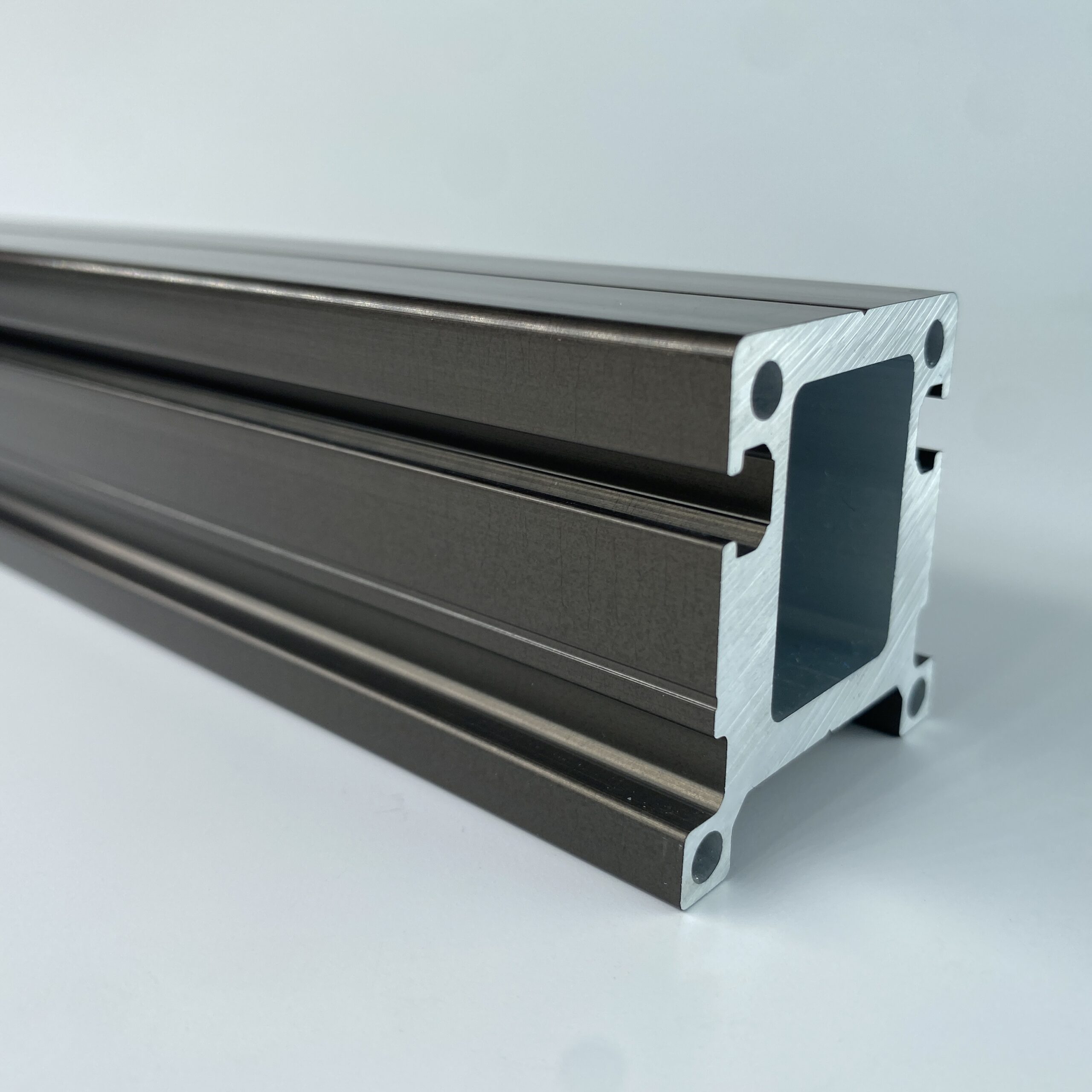
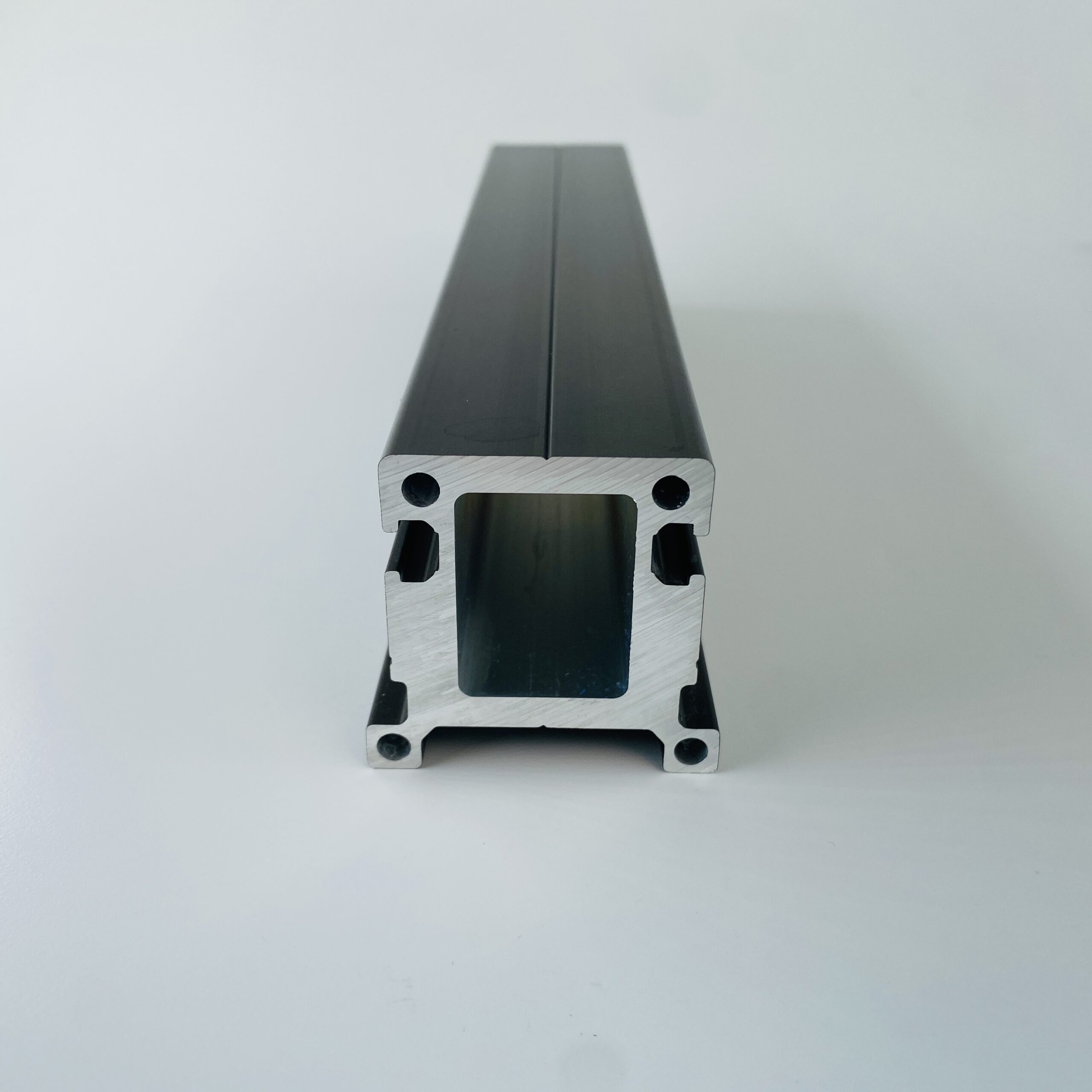
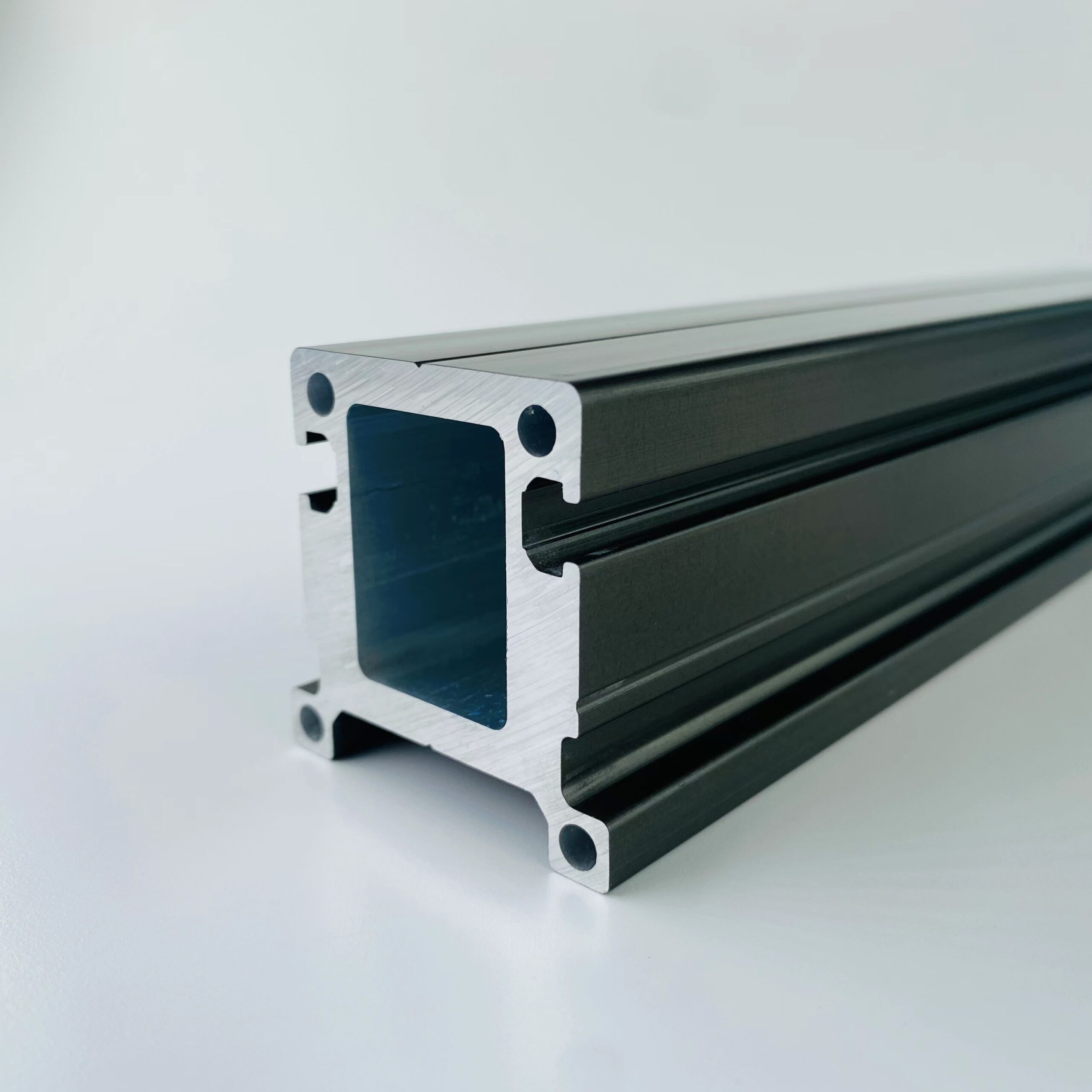

Key Specifications & Parameters
| Parameter | Specification / Options |
|---|---|
| Product Name | Industrial Hard Oxidation Anodized Aluminum Profiles |
| Material Grade | 6061-T6, 6082-T6, 7075-T6 High-Strength Aluminum Alloys |
| Oxidation Thickness | 30 – 50+ microns (Heavy-duty industrial standard) |
| Surface Hardness | HV 400 – HV 500+ (Approaching case-hardened steel) |
| Color Finish | Natural Dark Grey, Charcoal Black, Bronze (Depends on alloy and thickness) |
| Core Properties | Excellent dielectric insulation, extreme wear resistance, low friction |
| Deep Processing | Precise CNC milling, boring, accurate cutting, tapping, custom drilling |
| Custom Service | OEM/ODM mold development matching heavy industrial blueprints |
Product Applications
- Heavy Machinery & Linear Guides: High-friction structural rails, hydraulic cylinders, pistons, and sliding tracks requiring severe abrasion protection.
- Automotive & Aerospace Engineering: Engine blocks, gearboxes, lightweight chassis components, and military-grade structural joints.
- Textile & Printing Rollers: High-speed precision cylindrical guide bars and rollers subjected to constant friction and continuous material contact.
- Marine & Offshore Infrastructure: Rigging components, underwater housings, and deck hardware exposed to continuous saltwater splashing and extreme weathering.
Product FAQ
Q1: What is the main structural difference between hard oxidation and decorative anodizing?
A1: Standard decorative anodizing usually produces an oxide layer of 5 to 15 microns primarily for aesthetics. Hard oxidation (hard anodizing) is performed at near-freezing temperatures with higher current densities, creating a much thicker layer (30 to 50+ microns) with a dense structure that significantly enhances surface hardness and mechanical wear resistance.
Q2: Can we choose any custom vibrant color for hard oxidation profiles?
A2: Due to the extreme density and thickness of the hard oxide layer, the alloy inherently turns a natural dark grey, bronze, or charcoal black. While it can be dyed dark colors like deep black, it cannot achieve the bright, transparent vibrant colors typical of standard decorative anodizing.
Q3: How does the thickness growth from hard oxidation affect dimensional tolerances?
A3: Hard oxidation grows both into the metal and outwards from the original surface in roughly a 50:50 ratio. For example, a 40-micron coating will increase the outer dimensions of a profile by approximately 20 microns per side. Our CNC and engineering teams precisely account for this dimensional change during pre-machining to meet tight final tolerances.
Q4: Is it possible to perform CNC machining or tapping after the hard oxidation coating is applied?
A4: Because the hard anodized surface layer behaves similarly to ceramics with extreme hardness (HV 400-500+), post-coating machining can quickly dull or damage standard cutting tools. We highly recommend completing all precision drilling, cutting, and thread tapping before the hard oxidation stage to ensure optimal tool lifespan and fully coated internal surfaces.
Precision Aluminum Manufacturing & Custom OEM/ODM Services
Expert in Aluminum Extrusion, Deep Processing, and Finished Products.
