
LEADING CUSTOM ALUMINUMEXTRUSION MANUFACTURER
From mold design to precision CNC machining and surface treatment.
Providing one-stop aluminum profile solutions with 30 years of industry expertise.
New energy aluminum end plate
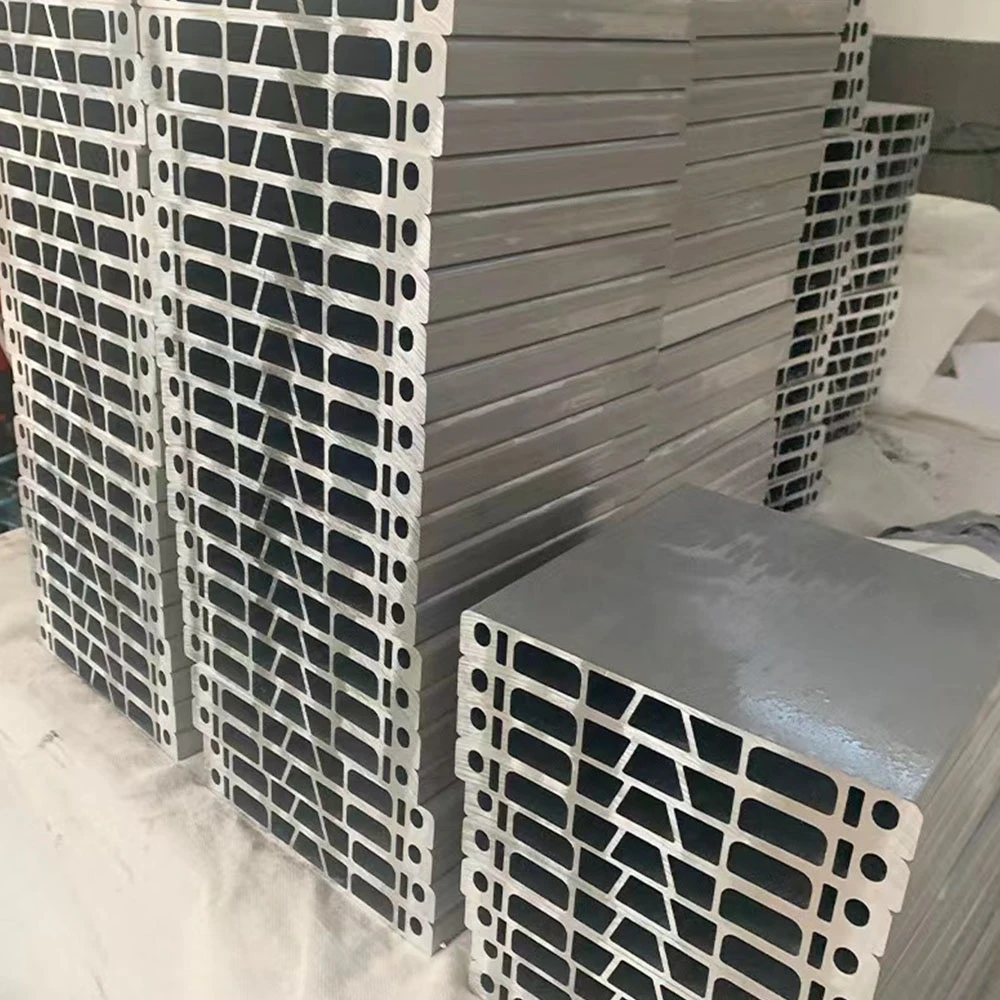
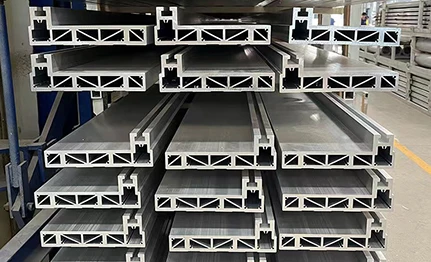
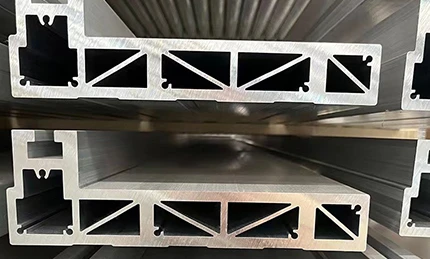
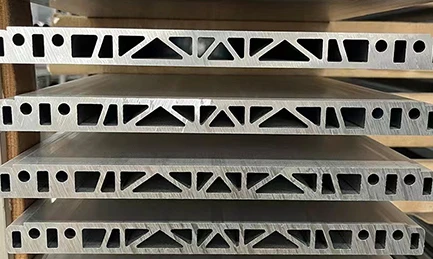
Key Specifications & Parameters
| Parameter | Specification / Options |
|---|---|
| Product Name | New Energy Aluminum End Plate / EV Module Compression Barrier |
| Material Grade | 6061-T6, 6063-T6, 3003-H14 (Automotive structural structural alloys) |
| Processing Capabilities | Heavy-Gauge Extrusion, Precision CNC Milling, Co-axial Tapping, Multi-Hole Boring, Deburring |
| Dimensional Accuracy | Strictly held within ±0.05mm flatness and alignment metrics to secure robotic fitment |
| Welding Adaptability | Fully compatible with Friction Stir Welding (FSW), CMT, and high-speed automated Laser lines |
| Surface Topography | Clean Sandblasted Anti-Glare, Insulating Powder Coating, Technical Anodized, Degreased Mill Finish |
| Quality Management | 100% compliant with IATF 16949 automotive international manufacturing standard tracking |
| Custom Service | Bespoke OEM/ODM engineering tool fabrication tracking high-precision CAD or STEP files |
Product Applications
- EV Lithium Module Clamping: Structural compression barriers positioned at both faces of the cell matrix to supply continuous holding pressure and limit battery cell swelling over time.
- New Energy Battery Enclosures: High-precision perimeter wall closures and face sealing blocks for pure electric vehicle (BEV) chassis battery packs.
- Hybrid Drivetrain Shielding: Compact structural enclosure boundaries packaging battery modules within plug-in hybrid vehicle (PHEV) powertrain arrays.
- Commercial ESS Storage Boxes: Heavy load-bearing structural end barriers applied to secure massive multi-tier liquid-cooled battery storage cabinets.
Product FAQ
Q1: Why do new energy vehicle battery modules require heavy structural aluminum end plates?
A1: Lithium-ion pouch or prismatic cells experience continuous volumetric swelling during charging and high-current discharging cycles. Without robust external restraint, this expansion will degrade cell internal contact structures and cause fatigue failures. Our aluminum end plates act as a high-strength mechanical bulkhead, maintaining uniform compression forces across the entire cell layout while avoiding unnecessary dead weight.
Q2: What dimensional tolerances do your CNC machining configurations maintain for bulk automotive batches?
A2: Automated electric car pack assembly demands extreme precision to secure seamless sealing and electrical routing lines. Utilizing advanced multi-axis CNC milling centers, we hold critical dimensions, face flatness, and bolt hole co-axial tolerances strictly within ±0.05mm, eliminating structural alignment deviations during robotic cell feeding lines.
Q3: How do your new energy plates respond during high-speed Friction Stir Welding (FSW) processing?
A3: Our aluminum alloy profiles pass through intensive surface chemical treatments to thoroughly eliminate volatile residues and surface oxide skins. The precise metallurgical composition of our 6000-series billets ensures excellent plasticization behavior and microstructural grain refinement during automated FSW line runs, providing a porous-free joint matrix built for liquid-tight sealing.
Q4: Can you provide customized dielectric insulating coating treatments for the inner faces of the end plate?
A4: Yes, absolutely. To eliminate high-voltage shorting hazards or arc flashover distributions inside the chassis battery box, we support diverse custom technical finishes. We can apply premium powder insulation coatings or specialized polymer films precisely to your designated face layouts matching your private technical blueprints.
Precision Aluminum Manufacturing & Custom OEM/ODM Services
Expert in Aluminum Extrusion, Deep Processing, and Finished Products.
