
Bypassing Middlemen and Trading Companies
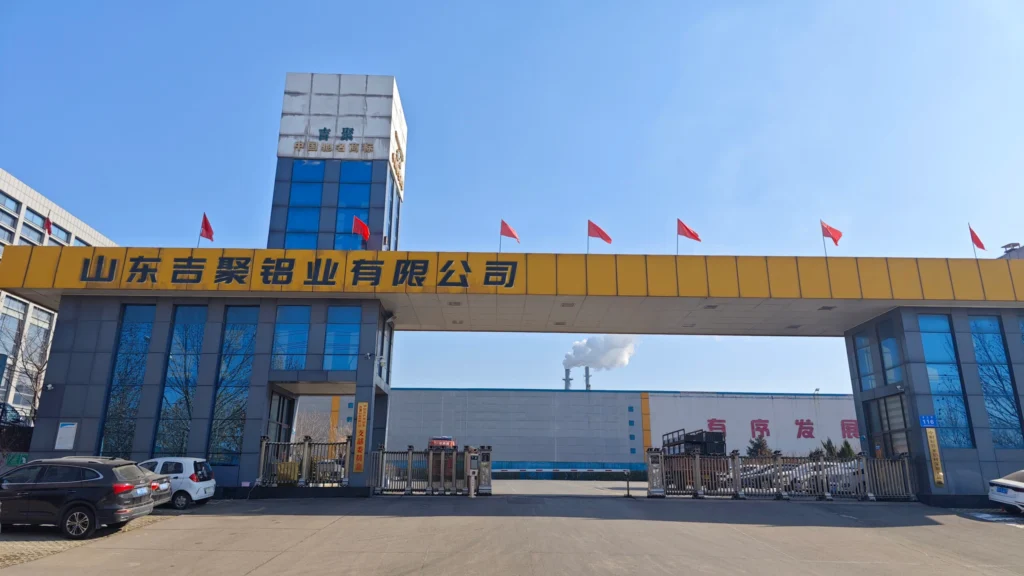
First, sourcing industrial materials requires absolute supply chain transparency. Consequently, many overseas buyers unknowingly engage with trading companies instead of real manufacturers. Furthermore, these middlemen add excessive margins and obscure the true factory origin. Therefore, procurement managers must demand direct factory evidence, such as live video tours or original facility documentation. Ultimately, engaging directly with a source factory drastically reduces procurement costs and ensures direct technical communication.
Evaluating the Sample Process Before Bulk Production
Moreover, testing a physical sample prevents catastrophic financial losses during mass production. Specifically, the engineering department extrudes a short prototype using the exact requested alloy. Consequently, the buyer tests this physical piece for dimensional accuracy and structural strength. Furthermore, genuine factories refund the initial mold fee once the bulk order hits a specific tonnage. Ultimately, this rigorous sample phase guarantees total alignment between the technical blueprint and the final product.
Understanding Minimum Order Quantities (MOQ) and Pricing
Additionally, buyers must negotiate realistic Minimum Order Quantities (MOQ) with the manufacturer. Typically, direct factories require a baseline tonnage to justify the machine setup costs. As a result, ordering larger volumes significantly decreases the per-kilogram extrusion fee. Conversely, trading companies often accept tiny orders but inflate the unit price astronomically. Therefore, buyers optimize their procurement budgets by consolidating their annual extrusion demands into scheduled bulk shipments.
| Supply Chain Metric | Trading Company | Direct Source Factory |
|---|---|---|
| Minimum Order Quantity (MOQ) | Very low (often 100kg) | Standard industrial volume (usually 1-2 Tons) |
| Unit Pricing | Highly inflated margins | Base LME aluminum price + transparent processing fee |
| Die / Mold Refund | Rarely offered | Automatically refunded upon reaching target volume |
| Technical Communication | Slow, third-party translation | Direct contact with production engineers |
Managing Payment Terms and Financial Security
Furthermore, securing the financial transaction protects the buyer’s capital. Generally, factories request a 30% Telegraphic Transfer (T/T) deposit to initiate the raw material purchase. Subsequently, the buyer transfers the 70% balance only after reviewing the final inspection reports and the Bill of Lading (B/L) copy. Consequently, this standard payment structure minimizes risk for both parties. Ultimately, smart buyers avoid unreliable suppliers demanding 100% upfront payments before production begins.
Defining Strict Quality and Export Packaging Standards
Similarly, international shipping subjects fragile metal components to extreme mechanical stress. Specifically, the manufacturing facility implements rigorous quality control protocols before any container sealing occurs. As a result, inspectors verify dimensional tolerances and surface treatment consistency precisely. Additionally, the logistics team packages every single profile using moisture-barrier PE film, pearl cotton, and reinforced wooden crates. Consequently, the buyer receives flawless materials ready for immediate assembly in wholesale aluminum profile projects.
Navigating International Customs and Import Duties
Additionally, successful global trade depends entirely on accurate documentation. Thus, the export department prepares precise commercial invoices, packing lists, and Certificates of Origin. Consequently, the receiving country’s customs agents process the shipment rapidly. Furthermore, buyers should consult a local customs broker to calculate exact anti-dumping duties or standard import tariffs based on the official HS Code. Ultimately, proactive document management prevents expensive port delays and excessive port storage fees.
Frequently Asked Questions for B2B Procurement
How does a buyer verify a Chinese aluminum factory?
First, procurement managers request the official Business License and ISO 9000 series certificates. Furthermore, buyers cross-reference the factory address on satellite maps to confirm physical manufacturing facilities. Ultimately, genuine factories welcome third-party audits without hesitation.
What is the standard lead time for an international aluminum order?
First, the factory requires 10 to 15 days to create the custom extrusion die. Subsequently, mass production consumes another 15 to 20 days depending on the order volume. Therefore, buyers should anticipate a 30-day production cycle before the sea freight journey begins.
Why do factories require the exact HS code?
Specifically, the Harmonized System (HS) code determines the exact export tax rebate for the factory and the import duty for the buyer. Consequently, providing the correct code ensures accurate quoting. Ultimately, buyers cross-reference this code with the World Customs Organization guidelines to avoid clearance issues.
What shipping method works best for heavy aluminum orders?
Typically, sea freight provides the most cost-effective solution for bulk industrial metals. Specifically, the logistics team loads standard 20-foot or 40-foot containers directly at the factory dock. Consequently, full container load (FCL) shipping minimizes handling risks and significantly lowers the per-kilogram freight cost.
Does the factory handle the destination customs clearance process?
Generally, the factory manages the export clearance from the Chinese port under FOB or CIF terms. Thereafter, the buyer assumes responsibility for the destination customs clearance. Therefore, buyers hire experienced local import brokers to navigate domestic tax regulations efficiently.

