
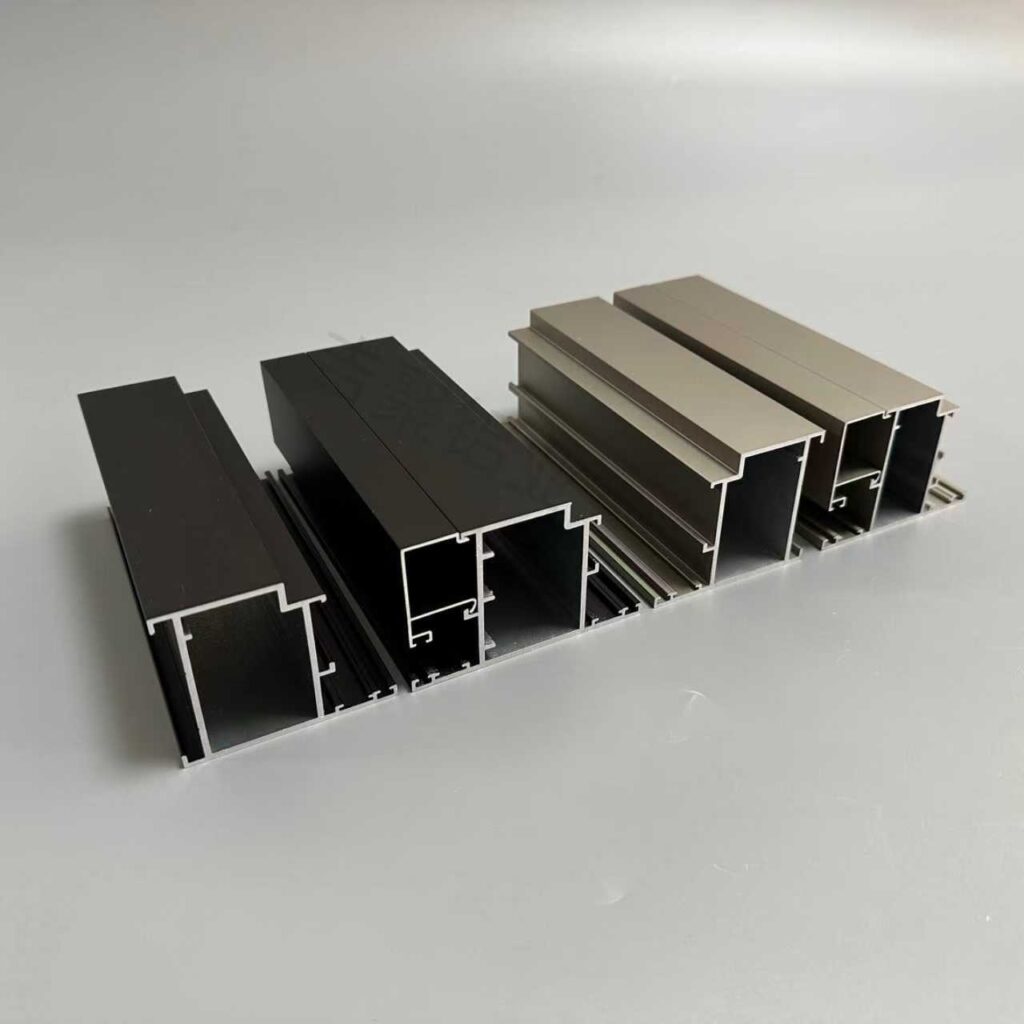
Custom aluminum profiles are not simply standard metal parts cut to size. For many industrial, architectural, and equipment projects, the profile needs to match a specific drawing, assembly method, surface finish, tolerance requirement, and delivery schedule.
That is why choosing the right custom aluminum extrusion manufacturer matters. A reliable supplier should understand the full process: drawing review, mold design, extrusion, surface treatment, CNC machining, inspection, packing, and export delivery.
At JIJU Aluminium, custom aluminum profiles are produced through an integrated manufacturing process, from mold development to extrusion and further processing. This helps buyers reduce communication gaps, control quality more easily, and keep the project schedule clearer.
What Are Custom Aluminum Profiles?
Custom aluminum profiles are extruded aluminum sections made according to a specific design instead of a standard stock shape. The cross-section can be designed for strength, weight reduction, assembly, decoration, heat dissipation, or installation convenience.
Common applications include:
- Industrial machine frames
- Door and window systems
- LED aluminum channels
- Aluminum heat sinks
- Solar and new energy components
- Aluminum enclosures
- Decorative and furniture profiles
- Guardrails and construction profiles
For buyers, the main value of customization is not only shape. A good custom profile can reduce secondary machining, simplify assembly, improve appearance, and lower total project cost.
Step 1: Drawing Review and Technical Communication
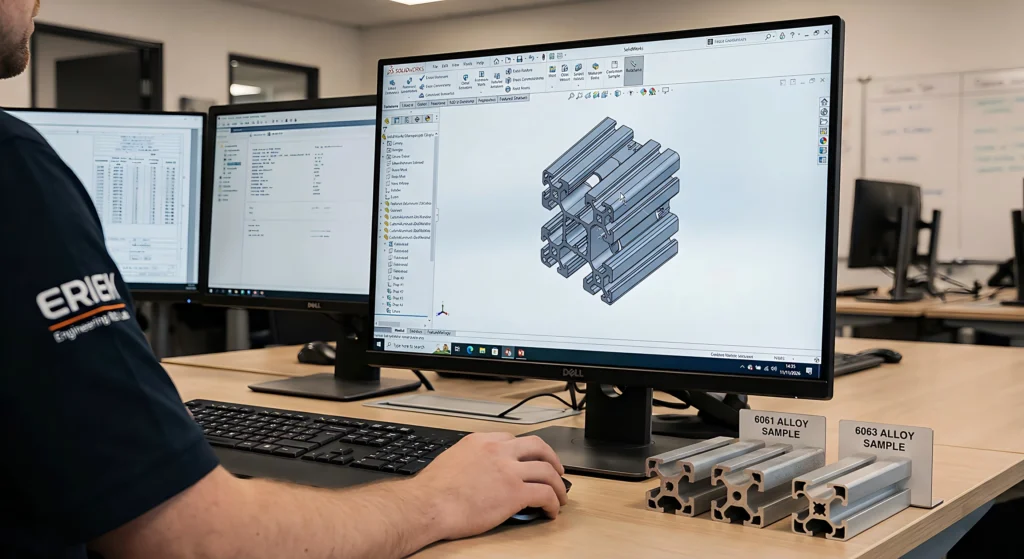
Most custom aluminum extrusion projects start with a drawing, sample, or basic design idea. Before opening a mold, the supplier should review several details:
- Profile cross-section
- Wall thickness
- Alloy grade
- Tolerance requirements
- Surface treatment
- Machining requirements
- Application environment
- Expected order quantity
This stage is important because a profile that looks good on paper may still need adjustment for extrusion feasibility. For example, very thin walls, deep cavities, sharp corners, or uneven thickness can affect production stability.
A practical manufacturer should not simply say “yes” to every drawing. They should help check whether the design can be extruded smoothly and whether small changes can improve strength, cost, or production efficiency.
Step 2: Mold Design and Mold Opening
Once the drawing is confirmed, the next step is mold design. The mold determines the final cross-section of the aluminum profile, so accuracy at this stage affects the whole project.
For custom aluminum profiles, mold quality influences:
- Dimensional accuracy
- Surface quality
- Extrusion stability
- Production speed
- Long-term repeat orders
If the project will need regular production, it is worth spending more time on mold confirmation before mass production. A small mistake in mold design can lead to repeated correction, delivery delay, and unnecessary cost.
Step 3: Aluminum Extrusion Production
During extrusion, heated aluminum billets are pushed through the mold to form the required profile shape. After extrusion, the profiles are cooled, stretched, cut, and aged according to the required mechanical properties.
Different projects may use different aluminum alloys, such as:
6063: commonly used for architectural and decorative profiles6061: often selected when higher strength is required6005: suitable for structural and transportation-related profiles6082: used for stronger industrial applications
The right alloy depends on the application. A decorative frame, a machine structure, and a heat sink may all need different material choices.
Step 4: Surface Treatment

Surface treatment is one of the most important steps for custom aluminum profiles. It affects both appearance and durability.
Common surface treatments include:
- Anodizing
- Powder coating
- Sandblasting
- Brushing
- Electrophoresis
- Wood grain finish
- Fluorocarbon coating
For outdoor construction profiles, corrosion resistance and color stability are important. For industrial equipment, wear resistance and dimensional consistency may matter more. For decorative profiles, color, texture, and surface uniformity are often the main concerns.
When extrusion and surface treatment are handled by the same supplier, it is easier to control schedule and quality feedback.
Step 5: CNC Machining and Further Processing
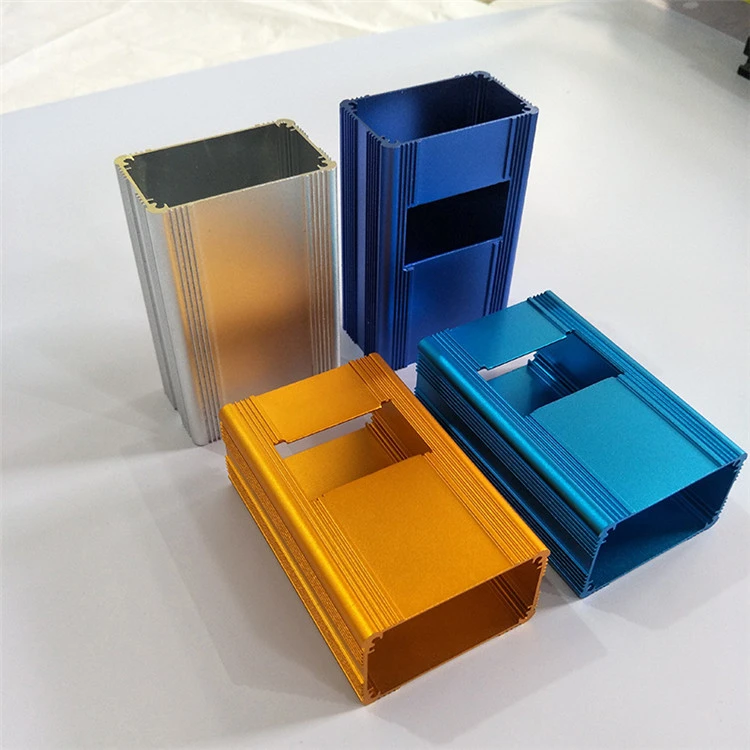
CNC machining is especially useful for:
- Aluminum enclosures
- Machine frame components
- Heat sink profiles
- Sliding rail profiles
- Mounting parts
- Precision assembly components
For buyers, one-stop processing can save time. Instead of sending extruded profiles to another machining supplier, the finished parts can be processed, inspected, packed, and shipped from one production system.
Step 6: Inspection, Packing, and Delivery
Before shipment, custom aluminum profiles should be checked carefully. Inspection usually includes:
- Dimension measurement
- Surface finish check
- Color consistency check
- Straightness inspection
- Machining position check
- Packing confirmation
For export orders, packing is also important. Aluminum profiles can be scratched, bent, or damaged during sea freight if they are not packed properly. A good supplier should consider profile length, surface treatment, quantity, and transportation method before packing.
Why Work With an Integrated Aluminum Profile Manufacturer?
For custom projects, the main risk is not only price. The bigger risks are wrong dimensions, unstable surface quality, poor communication, delayed delivery, and unclear responsibility when several suppliers are involved.
An integrated aluminum profile manufacturer can help buyers manage the full workflow in one place:
- Mold design
- Aluminum extrusion
- Surface treatment
- CNC machining
- Cutting and assembly
- Quality inspection
- Export packing
JIJU Aluminium was founded in 1994 and produces custom aluminum extrusion solutions for construction, industrial, decorative, lighting, and new energy applications. The company operates multiple extrusion presses, including equipment from 450T to 7500T, and provides in-house surface treatment and CNC machining services.
What Information Should You Send for a Quote?
To get a faster and more accurate quotation, prepare these details:
- Drawing file, such as CAD, PDF, or 3D file
- Alloy requirement
- Surface treatment
- Profile length
- Tolerance requirement
- Annual or first order quantity
- Application field
- Packing requirement
- Destination port or country
If you do not have a complete drawing, you can also send a sample photo, rough size, or application description. A technical team can help check whether the profile needs a new mold or can be adjusted from an existing design.
FAQ About Custom Aluminum Profiles
What is the minimum order quantity for custom aluminum profiles?
The MOQ depends on profile size, alloy, surface treatment, and mold cost. For custom molds, larger quantities usually help reduce the unit cost.
How long does custom aluminum extrusion take?
The timeline depends on mold complexity, sample confirmation, production quantity, and surface treatment. Buyers should confirm mold lead time and mass production time before placing the order.
Can aluminum profiles be CNC machined after extrusion?
Yes. Custom aluminum profiles can be cut, drilled, tapped, milled, punched, welded, and assembled after extrusion.
Which surface finish is best for custom aluminum profiles?
It depends on the application. Anodizing is often used for corrosion resistance and a metallic appearance. Powder coating is suitable when color matching and outdoor durability are important.
Can I order profiles based on my own drawing?
Yes. Custom aluminum profiles are usually produced according to buyer drawings, samples, or project requirements.
Conclusion
Custom aluminum profiles are most successful when the supplier understands both production and application. A good manufacturer should help check the drawing, improve the extrusion design, control surface treatment, complete machining, and inspect the final parts before delivery.
If you need custom aluminum profiles for an industrial, architectural, lighting, decorative, or new energy project, send your drawing or sample requirements to JIJU Aluminium. The team can review your design and provide a custom extrusion solution based on your project needs.

